
Medically reviewed by Dr. Smriti Sparsh (MBBS, MS, FMAS, FRE) · Last updated October 2026
Uterine fibroids treatment in Mansurchak, Begusarai starts with a fairly blunt question: medication, a fertility-preserving surgery, or removal of the uterus altogether? If you're still working out whether your symptoms are really fibroids as opposed to something else, the general explainer on uterine fibroids is the better first step.
This guide picks up from there, once treatment is the actual question in front of you. It walks through the clinical and surgical choices available, what recovery looks like for each, and how fibroids connect to fertility so you can bring an informed set of questions to your consultation. Not every fibroid needs treatment. Size, location, and symptoms determine that, not the diagnosis alone.
Why Smriti IVF is the Most Trusted IVF

Acclaimed IVF Experts

Affordable Treatment

Careful Cycle Monitoring

Clear Cost Guidance

24x7 Care
Empowering Your
Parenthood Journey
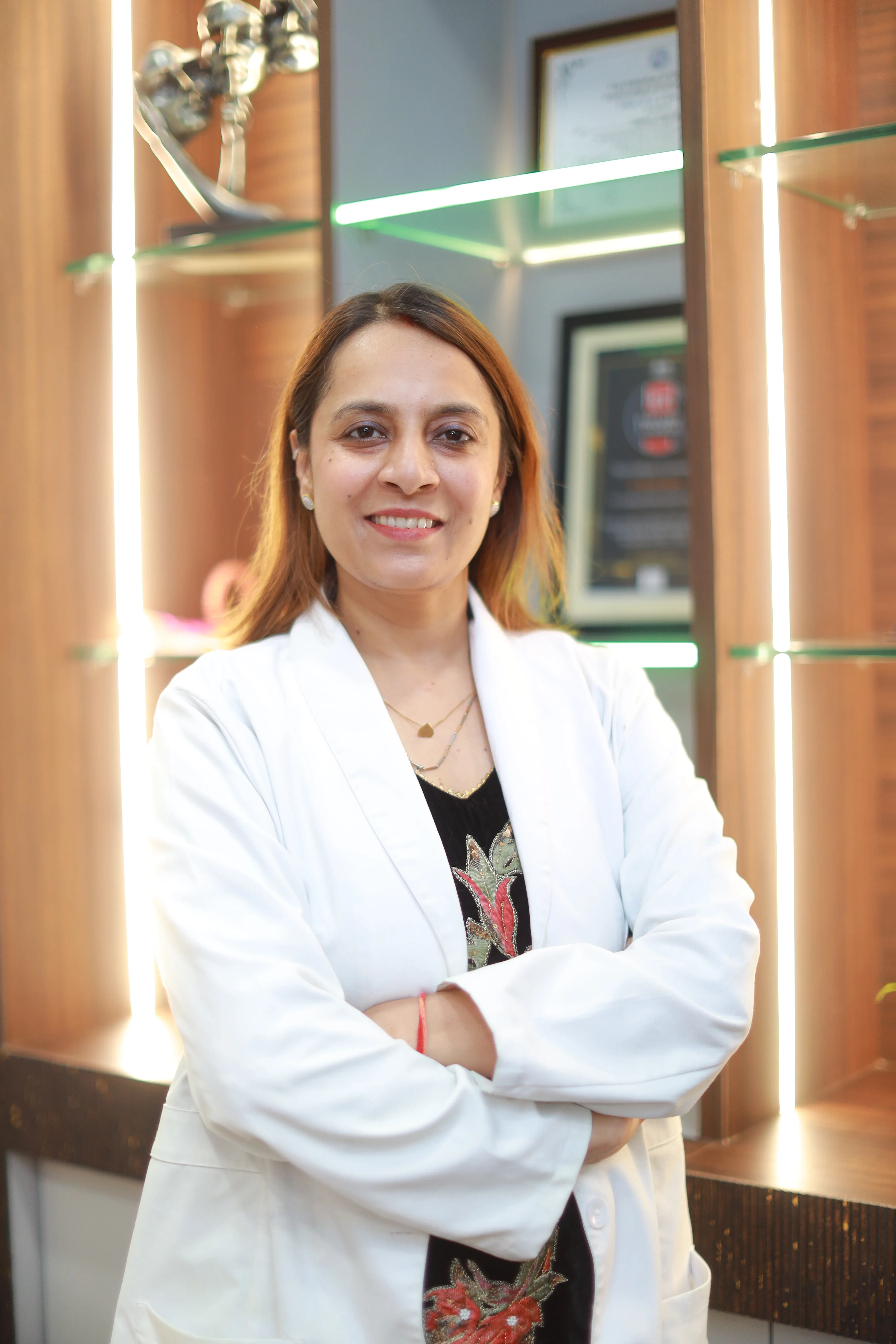
Dr. Smriti Sparsh is a highly qualified infertility and IVF specialist at Smriti IVF Begusarai. She possesses qualifications such as MBBS, MS, FMAS, FRE (Gujarat), and a Postgraduate Diploma in Sonography. With her compassionate approach and personalized treatment plans, she is dedicated to helping you achieve your dream of starting a family.
- Over 12 years of trusted fertility expertise.
- Tailored treatment plans for every unique need.
- Cutting-edge technology for advanced care.
- Compassionate support throughout your journey.
Years of
Expertise
Why Select Smriti IVF for Your Fertility Journey?
Smriti IVF combines advanced reproductive technology with a patient‑centric approach, giving you compassionate support at every step of your path to parenthood.
12+ Years Experienced Doctors
Highly experienced fertility specialists providing accurate, evidence‑based treatment plans tailored to your case.
Careful Cycle Monitoring
Modern protocols with close monitoring through every cycle, and each case reviewed individually.
Personalised Care
Every treatment plan is customised to your medical history, goals, and comfort level.
Advanced ART Labs
State‑of‑the‑art embryology labs with strict quality control for embryos and gametes.
Clear Cost Guidance
Costs are explained at consultation, based on your test reports and the treatment you need.
Trustworthy & Safe
Strict safety, privacy, and infection‑control protocols to keep you and your data secure.
Pay in easy EMI at 0% interest rate on eligible IVF packages.
What uterine fibroids are
Fibroids are benign growths of muscle tissue in the uterine wall. Some grow inside the muscle layer itself (intramural), some bulge outward on the uterus's outer surface (subserosal), and some grow into the uterine cavity (submucosal) - the last type matters most for fertility, covered below.
For causes, risk factors, and a full symptom checklist, the condition page on uterine fibroids covers that ground; this guide stays focused on treatment.
Symptoms that bring women in for treatment
Women as a rule come in for treatment due to a particular set of symptoms: periods that run longer or heavier than usual, a feeling of pelvic pressure or fullness, visible bloating, needing to urinate more regularly since a fibroid is pressing on the bladder, pain during intercourse, and fatigue that traces back to blood loss and the anaemia that follows it.
Not every fibroid causes any of this. Plenty stay silent and turn up incidentally on a scan done for another reason entirely. Treatment follows the symptoms, not the fibroid's existence on its own.
How fibroids can influence fertility
Fibroids and fertility interact through mechanism, not magic. A submucosal fibroid growing into the uterine cavity can distort its shape enough to get in the way of an embryo implanting - that is the clearest, most direct pathway. Larger intramural fibroids sit in the muscle wall itself. They can, depending on size and position, influence blood flow to the lining in ways that make conception or an ongoing pregnancy harder. Subserosal fibroids, which grow outward on the uterus's outer surface, rarely influence fertility.
The American Society for Reproductive Medicine draws this same distinction in its patient guidance: location and size decide fertility impact far more than just having fibroids does. Most fibroids are never a fertility problem.
Confirming the diagnosis
An ultrasound is as a rule the starting point. It shows fibroid size, number, and rough location well enough to plan next steps. If that picture is not clear enough, especially for a submucosal fibroid near the cavity, an MRI or a hysteroscopy fills in the detail a treatment choice really needs. Hysteroscopy has one advantage neither scan provides: it lets the doctor look directly inside the cavity, not just read an image.
Treatment choices for uterine fibroids in Mansurchak, Begusarai
Clinical management
Clinical management works on the fibroid's biology as opposed to removing tissue. Hormonal therapies such as GnRH agonists lower estrogen temporarily, which shrinks fibroid tissue and the symptoms along with it, though the effect reverses once the medication stops. Tranexamic acid takes a narrower method - it does not touch fibroid size at all; it just lowers heavy bleeding by helping blood clot normally during a period. Both suit women whose symptoms are manageable without surgery, or who need a bridge before a planned procedure.
Laparoscopic myomectomy
A woman in her early thirties with two or three intramural fibroids, who wants children later and wants to keep her uterus, is the standard candidate for laparoscopic myomectomy. The surgeon removes the fibroids through small keyhole incisions as opposed to open surgery, guided by a camera. It suits fibroid counts and sizes that keyhole instruments can manage; very large or very numerous fibroids occasionally still need an open method instead. Anyone who wants the general mechanics of how the laparoscope itself works can see the laparoscopy procedure explainer.
Hysteroscopic myomectomy
This option only works for submucosal fibroids sitting inside the uterine cavity. A fibroid buried in the muscle wall or growing on the outer surface is not reachable this way, and no instrument adjustment changes that. Within that restriction, though, it is the least invasive of the surgical choices: the surgeon removes the fibroid through the cervix using a hysteroscope, with no abdominal incision at all. The hysteroscopy procedure page describes how the instrument works, for anyone who wants that detail before a consultation.
Hysterectomy
Hysterectomy removes the uterus entirely, which ends both the fibroids and the possibility of a future pregnancy. It is reserved for women with severe or repeatedly recurring fibroids who have no future-pregnancy plans, or for whom the other choices have already been tried. It is not offered as a first-line treatment to anyone still planning a family.
What to expect before and after, and recovery timeline
Before any procedure, expect routine pre-operative imaging and standard fasting instructions for anything done under anaesthesia - your consultation sets the specifics for your case, not a generic checklist. Recovery afterwards depends heavily on which path was taken.
- Clinical management: no recovery downtime, since nothing is removed.
- Hysteroscopic myomectomy: usually back to normal activity within a few days.
- Laparoscopic myomectomy: as a rule one to two weeks before resuming normal activity.
- Hysterectomy: typically four to six weeks, as it is major surgery.
These are general ranges, not guarantees. Individual recovery differs by age, fibroid size, and overall health.
Cost of uterine fibroids treatment in Mansurchak, Begusarai
The cost of uterine fibroids treatment in Mansurchak, Begusarai is not one number - it depends entirely on which treatment path really fits your fibroids. Clinical management, a day-procedure myomectomy, and major surgery like a hysterectomy are priced on completely varied scales, so a figure quoted for one case informs you little about another. The only number worth trusting is the individualised estimate your consultation gives you, once your fibroid size, location, and selected treatment are known.
Who treats fibroids at Smriti IVF?
If you're searching for the best fibroid doctor in Mansurchak, Begusarai or the best fibroid consultant in Mansurchak, Begusarai, our in-house gynaecology and fertility team handles fibroid treatment at Smriti IVF, from diagnosis through to whichever treatment path fits your case. We will not claim to be the only option in the city. What matters more is that your treatment plan is based on your fibroids specifically, not a generic protocol.
Selecting between specialists is a bigger question than this guide covers; see how to find the right fibroid consultant in Mansurchak, Begusarai for that. Here, the focus stays on the treatment itself. Dr Smriti Sparsh's background is on her profile page.
Frequently Asked Questions
This guide is general guidance and does not take the place of a one-on-one clinical consultation - your personal scan outcomes and history decide what's really right for you.
Get a treatment plan based on your fibroids
Not every fibroid needs treatment. Schedule a consultation in Mansurchak, Begusarai to have your scans reviewed and get an individualised estimate for the path that fits your case.
Our IVF Center
Visit us at our Begusarai centre.
Experience Excellence. Choose Dr. Smriti Sparsh.
We are committed to providing world-class fertility treatments with state-of-the-art technology that meets international standards.

IVF Chain Of The Year
ET Healthworld National Fertility Awards 2021

IVF Champion Of The Year
ET Healthworld National Fertility Awards 2021

Best IVF Chain In India
ET Healthworld National Fertility Awards 2021
IVF Champion Of The Year
ET Healthworld National Fertility Awards 2021
Our Success Stories
Lots of Happy Couples with real stories from Smriti IVF patients,
we are proud that we have helped hundreds of couples to start their families year after year.